
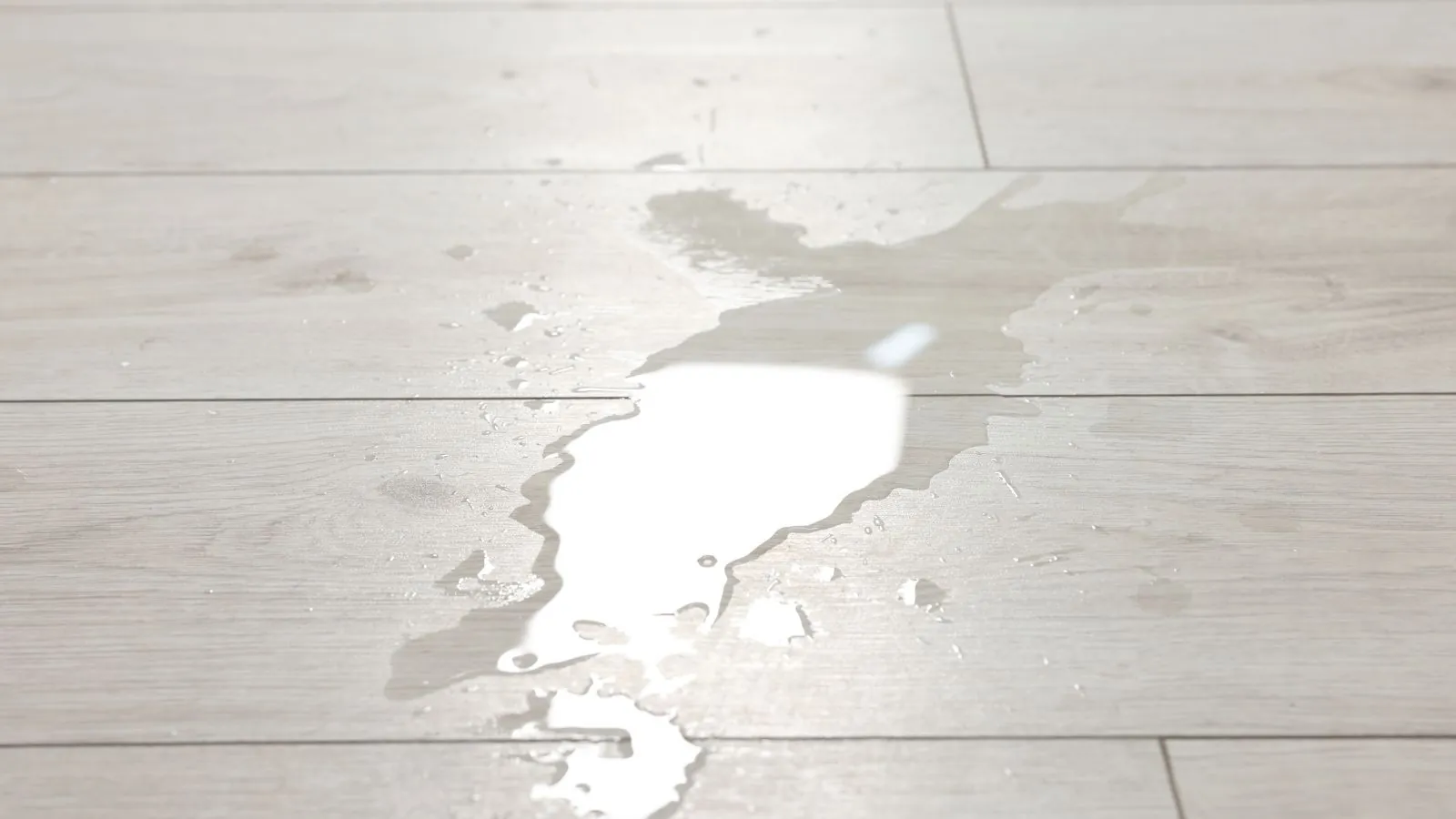
Not every leak needs a claim. Some are cheaper to fix yourself than the deductible, and some are bigger than they look. This article lays out the tradeoffs so you can decide with a clear head. It is general information, and your insurer or agent can speak to your policy.
Whatever you decide, protect the property. Stop the water, dry the area and keep your records. Those steps cost little and keep your options open.
The deductible is the first number
Your policy has a deductible, the amount you pay before the insurer pays. If the repair costs about the same as the deductible or less, filing may produce little or nothing. Ask your agent what your water damage deductible is, since some policies use different deductibles for different causes.
Do not guess at the repair cost. A plumber's invoice and a drying estimate give you real numbers. A leak that looks small on the surface may have soaked a wall cavity, so measure before you decide.
Filing versus paying out of pocket
The decision rarely has one right answer. This table lists the common considerations.
| Consideration | Filing a claim | Paying yourself |
|---|---|---|
| Cost near the deductible | Little or no payment | You keep control |
| Hidden damage found later | Documented from day one | May be disputed if you never reported |
| Policy record | The claim may appear in your history | No record with your insurer |
| Paperwork | More forms and calls | Less paperwork |
| Large unknown scope | Insurer helps fund the scope | You carry the risk |
Ask your agent how a claim may affect renewal before you file. Practices vary by insurer.
Reporting is not the same as filing
Many policies require prompt notice of a loss. Some insurers will log a call about a loss without opening a full claim, while others treat any report as a claim. Ask before you give details, and ask how an inquiry is recorded.
Reading your policy for the notice requirement matters. A delay in reporting can complicate a claim later, especially if the damage turns out to be larger. Weigh that against any effect on your record.
When a small leak is not small
A drip under a sink can wet the cabinet base and the subfloor. A slow ceiling stain can mean a saturated cavity above. A damp spot on a basement wall can mean a hidden foundation problem. These leaks look small and may not be.
If you cannot see the full extent, a moisture check tells you. A crew can map the wet area with meters and a thermal camera and tell you what is likely to dry in place. That information changes the decision. For ceilings, see ceiling water damage repair.
What coverage often looks like for a minor leak
A sudden failure, such as a burst supply line, is often covered. A leak that went on for weeks is often excluded under wear or long-term seepage language. Insurers sometimes distinguish between the water damage and the cost of fixing the pipe itself. Read the specific wording of your policy.
If the cause is an appliance, the policy may cover damage to floors and cabinets but not the appliance. The details are in the policy, and a call to your agent is the fastest way to find them.
Protecting yourself either way
Start water extraction and drying within a day. Photograph the damage and the repair. Keep the plumber's invoice. Save the failed part. Write a short timeline.
If you pay out of pocket today and later find hidden damage, these records help you file then. If you file now, they strengthen the claim. In both cases, the first day matters most.
Questions to ask your agent before deciding
Ask your agent how the policy treats water damage deductibles, how a claim affects renewal, whether an inquiry is recorded and whether there is a time limit for reporting. Ask whether the cost of tearing out to reach a leak is covered. Ask what the policy says about mold after a covered loss.
Agents see these questions often, and the answers are specific to your insurer and your policy. A few minutes on the phone can save a poor decision in either direction.
A simple decision frame
Get the cost of the repair and the drying. Compare it with your deductible. Consider whether hidden damage is likely. Consider what you know about the policy and your claim history. If the numbers are far apart or the scope is uncertain, a conversation with your agent comes first.
There is no shame in paying a small repair yourself. There is also no shame in filing when damage is large or unclear. Make the decision with real numbers.
Renters, condo owners and landlords
If you rent, notify your landlord right away, since the building is the landlord's responsibility and your belongings fall under your renters policy. If you own a condo, check your association's rules and your master policy, because a small leak may cross unit boundaries. If you are a landlord, document the tenant's report and the repair.
In each case, a written record of who reported what and when avoids disputes later.
Key points to remember
Get real numbers for the repair and drying. Compare them to your deductible. Ask your agent how reporting works and what the policy says about water. Protect the property and document everything either way. Do not ignore a small leak that may be bigger than it looks. If hidden damage turns up later, the records you kept from day one will make every conversation easier.
A Norton note on timing and flood coverage
The Massachusetts Division of Insurance states that standard homeowners policies do not cover flood. If your leak came from storm water rising outside rather than a failed pipe, a normal policy may not respond. Norton's 2018 resilience workshop summary notes flooding on Walker Street, among other roads. If your property sits low, ask your agent whether a flood policy fits.
Nearby towns and further reading
The same decision applies in Plainville, North Easton and the rest of the area. Deductibles, wording and records are the common thread. For appliance-related leaks, see appliance leak water damage.
Thinking about the long term
One leak is easier to handle than a pattern. If you have had two or three small leaks in the same area, a plumber should check the pipes. A pattern suggests a failing line, and the third leak may be much larger than the first two.
Keep a log of leaks and repairs. It helps you decide when a repair becomes a replacement, and it helps any future claim show the property was maintained.
Common questions
Usually the claim would pay little or nothing, but reporting and records still matter. Ask your agent how your insurer handles inquiries.
It may, depending on the insurer. Ask your agent before you file.
Records from the first day help. Notify your insurer promptly if you discover more.
Often not. Policies commonly exclude long-term seepage.
Flood coverage is a policy matter. Check the FEMA map and ask your agent.
References for this article
This guide is based on EPA moisture and mold guidance, Massachusetts Division of Insurance consumer information and the ANSI/IICRC S500 and S520 standards. Check local rules with the town before you act.