
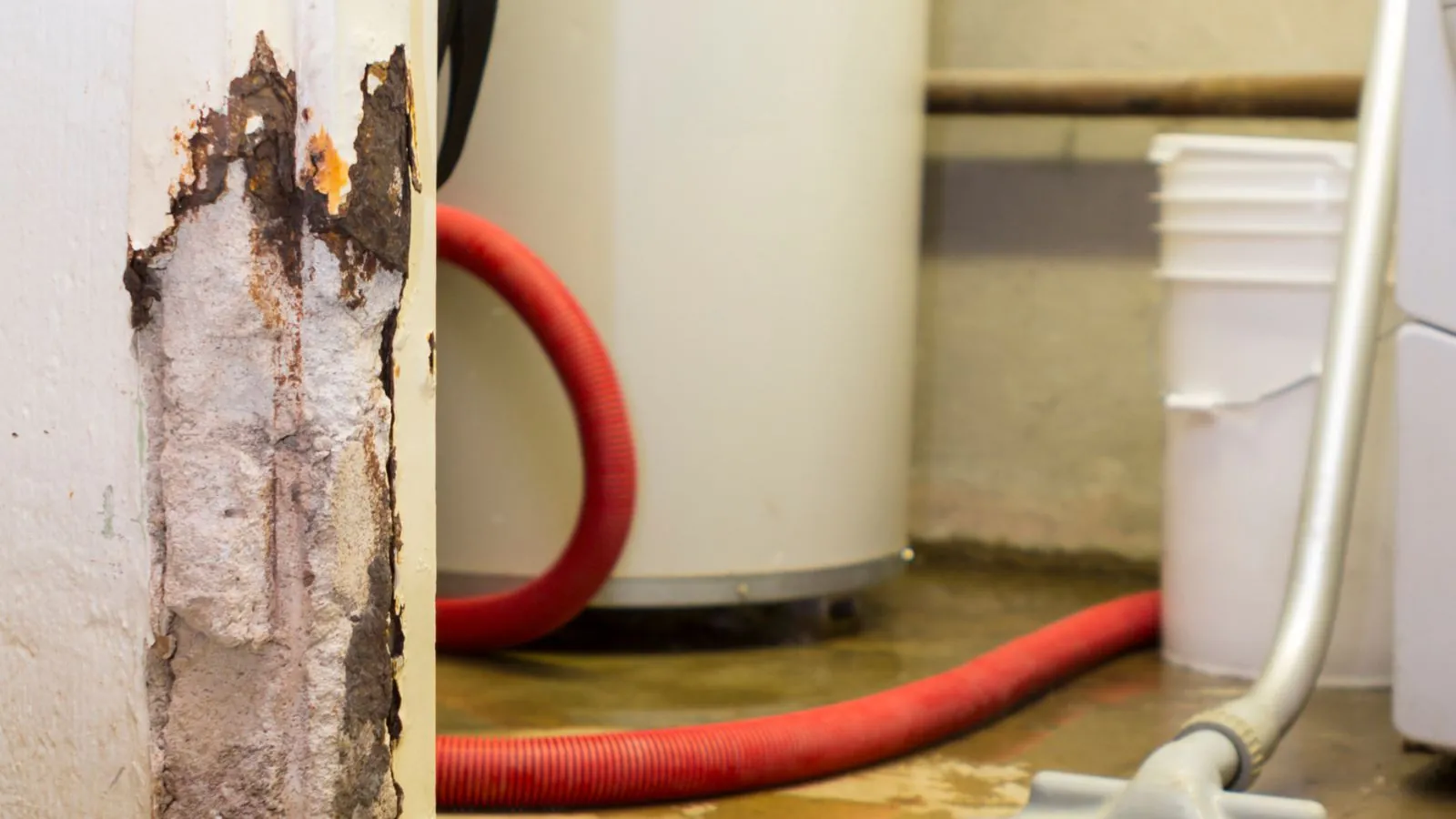
Sewage backup is an emergency because the water is contaminated from the moment it enters the house. Emergency sewage cleanup calls in Norton go to our 24/7 line, and a crew in protective gear can be dispatched the same day when available.
Keep everyone out of the affected area, especially children and pets. Do not flush or run water, since that sends more into the backup. Do not try to clean it with towels. Wash your hands if you touched anything, and ask your doctor if you have health questions.
Symptoms people search for before they know it is sewage
Common signs are a gurgling toilet, a floor drain that bubbles, water backing into a tub or shower when you run the washer, a sewer smell in the basement and dark water coming up from a drain.
These symptoms point to a blockage somewhere in the line, either inside the house or in the lateral that connects to the main. A plumber clears the blockage. The restoration crew handles what came up.
Norton: sewer or septic?
Not every Norton home connects to a public sewer. Some use private septic systems. Ask the Norton building department or the Board of Health which applies to your address. The cleanup steps are similar, but the cause and the repair differ, and a septic overflow may involve a septic contractor instead of the town.
Backup coverage is also separate. The Massachusetts Division of Insurance notes that sewer and drain backup is typically covered only by an endorsement to a homeowners policy, so check yours.
Sewage backing up now?
Do not use water, and call the 24/7 line.
Sewage emergency: how cleanup works
The goal is to remove the contamination, not just the water.
Contain and protect
Crew suits up, the area is sealed off and the source is identified.
Remove water and solids
Pumps and extraction units remove liquid, and solids are bagged.
Remove porous materials
Carpet, pad, insulation and soaked drywall are discarded.
Clean, sanitize, dry
Hard surfaces are cleaned and sanitized, then the structure is dried. See structural drying.
Cleaning follows the Category 3 guidance in ANSI/IICRC S500. Ask any company whether its crews work to that standard.
What can be cleaned and what goes
Contaminated water changes what is salvageable.
| Item | Usually | Why |
|---|---|---|
| Carpet and pad | Discarded | Porous, cannot be reliably cleaned |
| Drywall wet by sewage | Cut out and replaced | Porous. See wall and drywall repair |
| Tile, concrete, sealed wood | Cleaned and sanitized | Non-porous surfaces |
| Upholstered furniture | Usually discarded | Porous and hard to sanitize |
What to do while you wait for the crew
Keep the area closed off and shut the door if there is one. Turn off the heating or cooling system if the ductwork runs through the affected space, so air does not carry odors into other rooms. Do not use fans on the affected area, which can spread contamination.
Take photos from the doorway and write down what the water touched. Gather medications, documents and valuables from clean areas only, and leave wet items where they are for the crew to sort.
Deodorizing and the final check
Odor can linger in porous materials and in cracks. After removal and cleaning, crews use air scrubbers and deodorizers, and they check that no wet or stained materials remain. A smell that persists after cleaning usually means something was missed or the drain is still leaking.
Ask for a walkthrough before the rebuild begins, and ask how the crew handled the Category 3 materials and disposal.
What affects the cost of sewage cleanup
Contamination raises the scope.
Volume and area
More water and more rooms add work.
Porous materials
Removal and disposal add up.
Protective measures
Containment and gear are part of the job.
Source repair
A plumber clears or repairs the line separately.
Rebuild
Replacement of flooring and drywall follows.
Ask your insurer about sewer or drain backup coverage. Without the endorsement, the loss may not be covered.
Common questions
Yes. The line answers around the clock, every day of the year. Sewage backups often happen when the system is in heavy use, and same-day response is offered when a crew is available.
Not recommended. Sewage water is contaminated, and porous materials cannot be reliably cleaned. A crew uses protective gear and proper disposal.
A plumber clears the line, and the restoration crew handles the cleanup. You may need both.
Sewer and drain backup is often covered only with an endorsement. Check your policy and ask your insurer.
Stay out of the affected rooms. Ask your physician if anyone has health concerns, and arrange a place to stay if the affected area includes your only bathroom.
Standards and references
ANSI/IICRC S500 is the published standard for professional water damage restoration, and S520 covers mold remediation. Read the Massachusetts Division of Insurance for claim basics and the EPA mold pages for moisture control.