
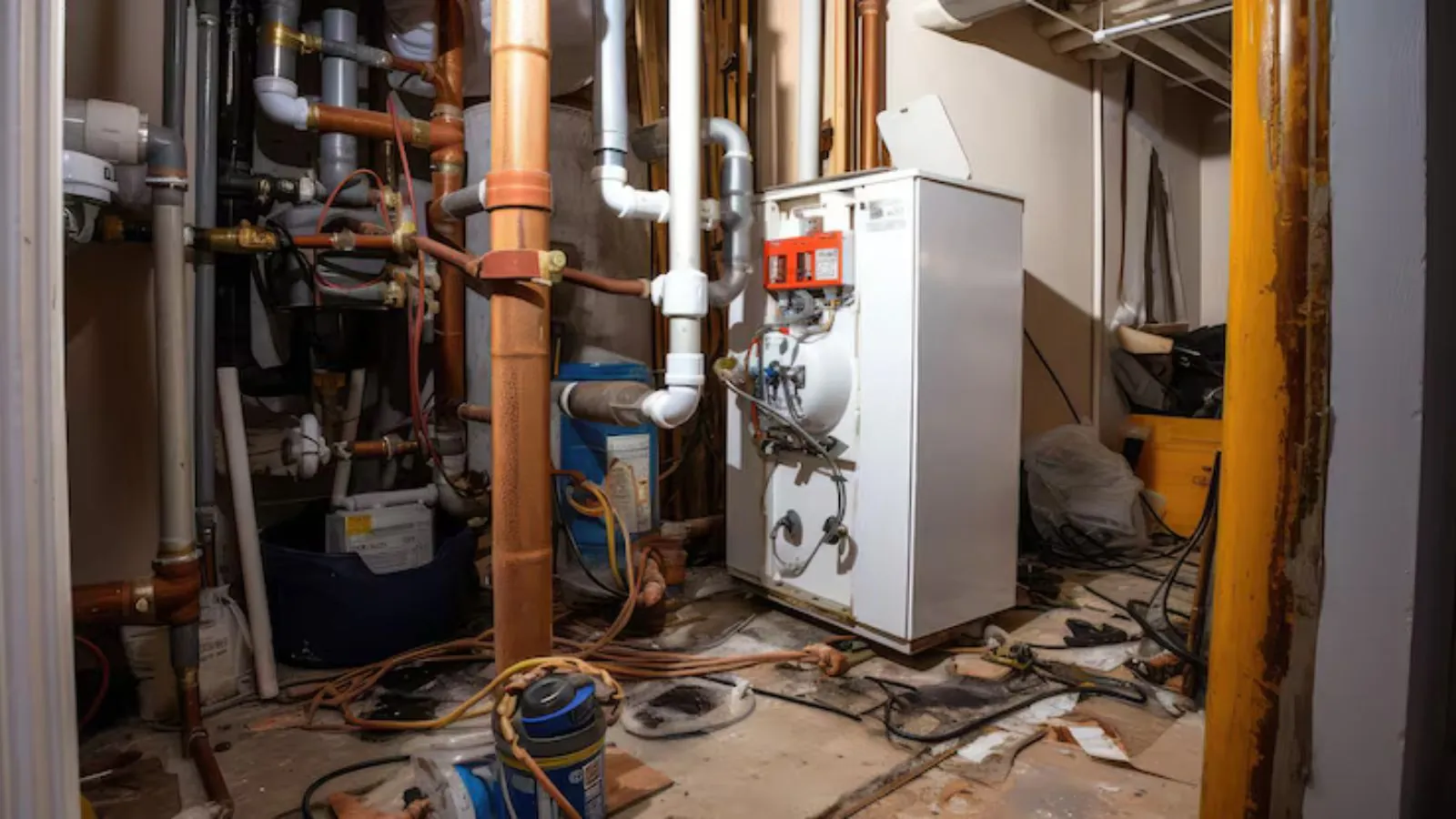
A water heater leak is an emergency when the tank fails, because a full tank empties fast and keeps refilling from the supply line. Water heater leak cleanup in Norton starts with the 24/7 line, and the first call should include whether the water is still running.
Turn off the power or gas to the heater at the switch or valve if it is dry and safe to reach, then close the cold water supply valve on top of the tank. Move stored items off the floor, keep people away from standing water near electrical equipment, and call. Same-day response is offered when a crew is available.
When a water heater leak is an emergency
A slow drip at a fitting is a repair call for a plumber. A tank that has split or a relief valve that is blowing is an emergency, because the water will not stop until the supply is closed. Rust-colored water on the floor or a puddle that grows while you watch means close the valve now.
Most Norton water heaters sit in a basement, a utility closet or a garage, so the first things wet are the slab, stored boxes and the bottom of nearby walls. If the heater sits on a finished floor above living space, the ceiling below is at risk, and the ceiling water damage page describes what that looks like.
What the cleanup includes
The crew removes standing water with a pump or extraction unit, then checks the walls and floor for moisture with a meter. Cardboard storage, carpet remnants and insulation that wicked water are removed because they hold moisture and can grow mold.
Drying equipment then runs on the affected area. A basement slab dries slowly, so dehumidifiers matter more than fans there, a point explained in structural drying and dehumidification. The plumber replaces the heater, and the restoration crew works around that schedule.
Tank failed and water is spreading?
Shut off the cold supply and call the 24/7 line.
Failure type and what to expect
Water heaters fail in a few predictable ways, and each leaves a different mess.
| Failure | What you see | Cleanup scope |
|---|---|---|
| Tank rupture | Large volume of water, fast | Pump, extraction, wall and floor drying |
| Relief valve discharge | Water at a pipe near the top or side | Usually limited, check the drain path |
| Fitting or supply leak | Drips that wet the floor over days | Localized drying, check for hidden moisture |
| Condensation or drain pan overflow | Damp floor around the base | Dry the area, check the pan and drain line |
Ask a plumber whether the unit should be replaced, since a tank that has leaked from the shell cannot be repaired.
Choosing a replacement and avoiding a repeat
A plumber can tell you the age of the failed unit from the data plate. Tanks tend to wear out gradually, and a drain pan with a drain line, a leak sensor and a shutoff valve limit the damage if the next one fails.
Check the temperature and pressure relief valve discharge pipe goes to a safe spot, and ask the plumber about an expansion tank if your system calls for one.
What drives water heater cleanup cost
The size of the leak and where the heater sits decide the scope.
Volume released
A full tank across a slab is more work than a slow drip.
Location
Finished basements and upper floors add drying and ceiling work.
Stored contents
Boxes and furniture need to be moved, dried or discarded.
Time before discovery
A leak found after a weekend away is a larger job.
Rebuild
Drywall and flooring replacement is scoped after drying.
Sudden tank failure is often covered, but long-term seepage from a leaking fitting may not be. Ask your insurer, and note that the cost of the new water heater itself is typically a separate matter from the water damage.
Nearby services that may apply
If the leak reached a kitchen or laundry area, the notes on appliance leak water damage cover washers and dishwashers that share the same lines. For heaters that serve a larger property, the commercial water damage page covers business buildings.
What to do first, and what not to do
A failed tank mixes hot water, gas or power and a wet floor.
Safety steps
- Close the cold water supply valve on top of the tank
- Shut off power or gas to the heater if it is dry and safe to reach
- Keep out of standing water near the electrical panel
- Do not relight a pilot in a wet area
Common questions
Yes. The phone is staffed all night and all weekend. A failed tank at 2 a.m. gets the same response as one at noon, and same-day response is offered when a crew is available.
Not if there is standing water around it and it is still powered. Shut off power at the panel only if the panel is dry, or at the switch if one is nearby and dry. Otherwise stay back and call.
No. A plumber replaces the heater. The restoration crew handles water removal, drying and any rebuild of walls or floors that were damaged.
It depends on the slab and the walls. Concrete holds moisture, so drying often takes several days. The crew will take readings each visit and tell you when the area is dry.
Describe when you found the leak, what you shut off, and send photos of the heater, the water and the damage. Ask whether the policy covers the water damage and the appliance separately.
Standards and references
Two published standards frame the work: ANSI/IICRC S500 for water and S520 for mold. Official consumer information lives with the EPA on moisture and the Massachusetts Division of Insurance on coverage.