
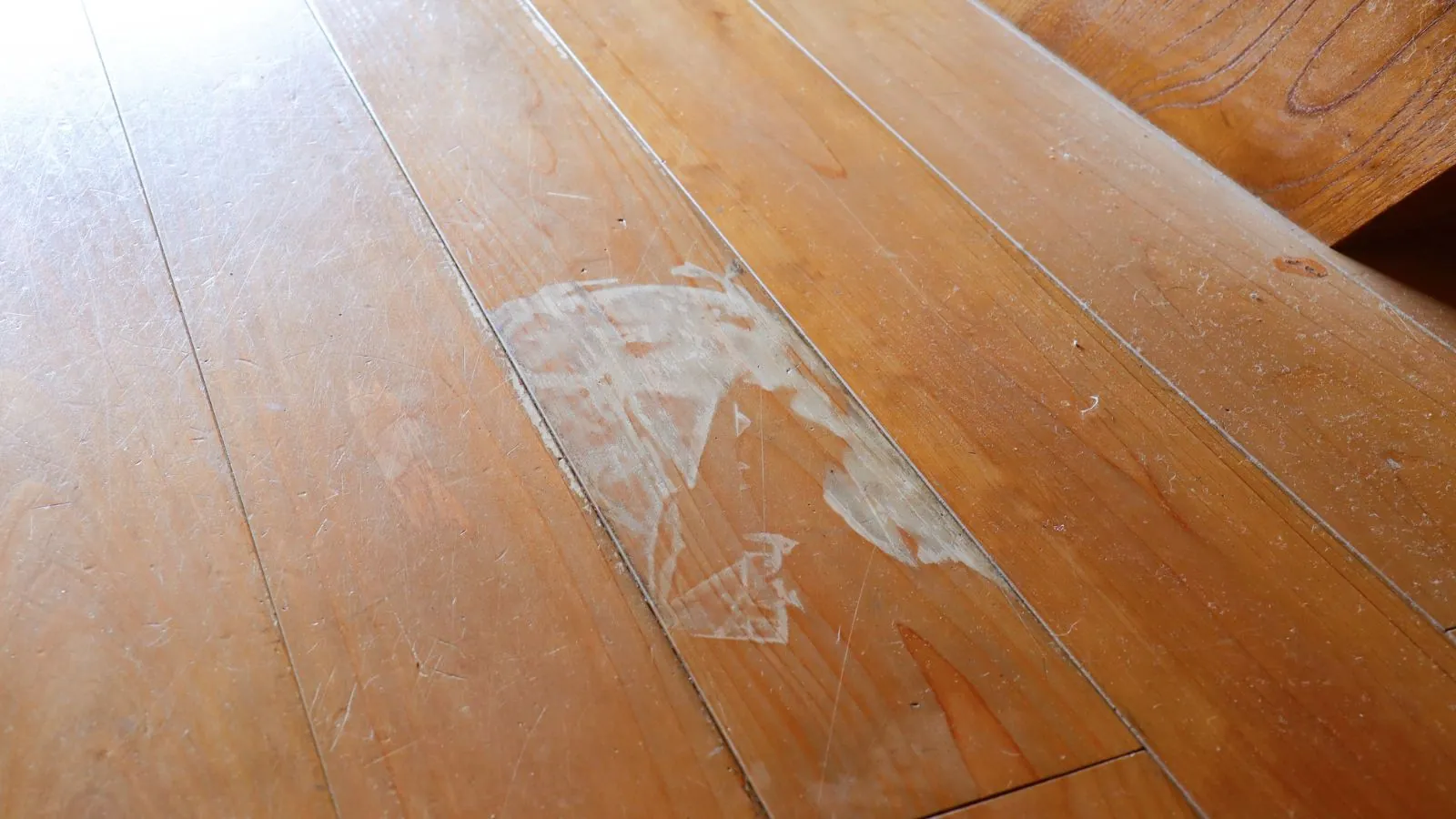
Hardwood floors swell as they absorb water, and the boards can cup, crown or buckle. The sooner moisture is pulled out, the more likely the floor can be saved. After a leak, a crew measures the wood and the subfloor, then decides whether to dry in place or replace.
If water is on the floor, mop up what you can, lift furniture off the surface and photograph the damage. Do not use heat to speed drying, since it can crack the boards. Call with questions and a crew can check readings.
What water does to a wood floor
Water enters through gaps between boards and soaks into the wood, which swells across its width. Boards pushed against each other lift at the edges, a pattern called cupping, or push upward at the center, called crowning. In bad cases they buckle away from the subfloor.
Finish can hide the damage at first. Dark stains, white clouding, and a musty smell point to moisture sitting under the boards. A meter is the only reliable way to know what is wet below the surface.
Saving a hardwood floor
Speed matters most in the first few days.
Map the floor
Meters check the boards and the subfloor to find where water went.
Dry in place
Drying mats and dehumidifiers pull water up through the boards.
Decide
After drying, the floor is checked for cupping, and sanding or replacement is planned.
Cupping often settles after the wood reaches normal moisture, so judgment comes after drying, not before.
Boards lifting or darkening?
Call and ask about a moisture check.
Hardwood damage and the usual outcome
The outcome depends on how long the wood stayed wet.
| Condition | What it looks like | Usual path |
|---|---|---|
| Light moisture, caught early | Slight dampness, no movement | Dry in place, no repair |
| Cupping | Board edges higher than centers | Dry fully, then sand if it settles |
| Buckling | Boards lifting off the subfloor | Remove and replace affected boards |
| Dark staining or mold odor | Black marks, musty smell | Replace boards and check the subfloor. See mold remediation |
Floors over a basement or slab are checked from below too. See slab leak water damage for hidden sources.
Why hardwood moves so much after a leak
Wood takes in water along its width more than its length, so boards grow wider and push against each other. A floor that was nailed or glued tightly has nowhere to go, and the boards lift or cup. The reverse happens during drying: boards shrink back, often leaving gaps.
Floors installed over a basement or a crawl space are exposed to moisture from below. A leak in the space beneath can damage a floor that has never had water on top of it, which is one reason the underside of the floor is checked as well as the surface.
Drying mats, tenting and holes in the subfloor
Specialty drying systems can pull water out through the top of the boards. A mat is laid on the floor, sealed and connected to a pump so it draws moisture up. In some cases small holes are drilled in the toe-kick or baseboard to move air behind the boards.
These methods do not suit every floor. Glued-down floors, very wide boards and floors with a thick finish respond differently, and a crew chooses based on readings taken on the first visit.
Sanding, refinishing and matching
After a floor dries and settles, light cupping often can be sanded flat and the finish renewed. Matching stain on a partly replaced floor is hard, so some owners choose to refinish the whole room.
Ask for samples before you decide. Daylight changes the color of stain, and a spot test in a closet or under a rug shows how a patch will look once the floor is finished.
What affects the cost of hardwood floor repair
Hardwood is expensive to replace, so the plan matters.
Species and finish
Rare species and factory finishes are costly to match.
Area
One room differs from a full level.
Time wet
Days of moisture reduce the odds of saving it.
Subfloor
Wet subfloor adds work.
Refinishing
Sanding and refinishing are separate from drying.
Insurance often covers sudden water damage to floors. Ask your insurer, and save a board sample if boards are replaced.
Common questions
Often, if it is dried promptly. Many floors flatten as they dry, and a light sanding finishes the job. Buckled floors are less likely to recover.
Typically several days, depending on thickness and how wet it was. Readings guide the decision.
Not before a crew has checked. Pulling boards can damage tongue-and-groove joints. In some cases removing a few boards helps drying, and a crew decides.
No. Fast heat can crack boards. Controlled dehumidification is safer.
Yes. Engineered boards often delaminate when wet. They are more likely to be replaced.
Standards and references
Ask any company whether its crews work to ANSI/IICRC S500, the water damage restoration standard, or S520 for mold. The EPA explains moisture control, and the Massachusetts Division of Insurance publishes insurance guidance.