
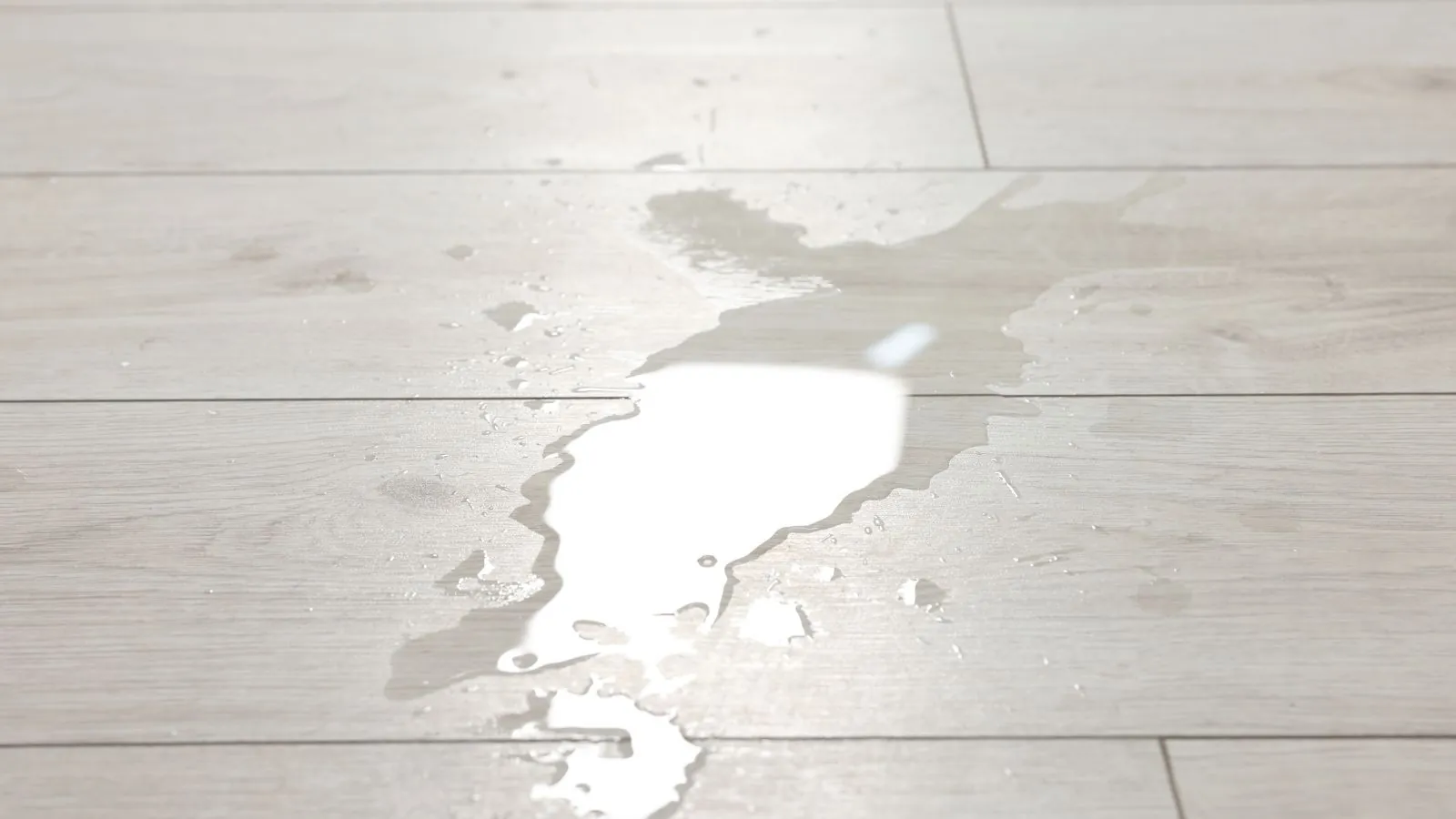
An appliance leak is an emergency when a supply hose lets go, because the line stays pressurized and keeps pouring until the valve is closed. Appliance leak water damage cleanup in Norton starts at our 24/7 line, and the first step on your side is to close the shutoff behind the machine.
Unplug the appliance only if you can reach the cord without standing in water. Close the supply valve, move rugs and boxes, and photograph the area. Same-day response is offered when a crew is available, and the dispatcher can talk you through the safe steps while you wait.
Which appliance failed matters
Washing machine hoses fail at the connection, usually with a burst that sends water across a laundry room in minutes. Dishwasher leaks are slower and seep under the cabinet and into the subfloor. A refrigerator ice-maker line is small, but it can run for days behind the unit before a stain shows.
The Massachusetts Division of Insurance notes that some homeowners policies cover sewer and drain backup only through an endorsement, which matters for a washer drain overflow. Read your policy to see which kind of water your coverage addresses, because supply-line leaks and drain backups are treated differently.
Appliance leak emergency: what the crew does
The method depends on whether the water spread under finished materials.
Pull the appliance
The machine is moved so the wall and floor behind it can be checked.
Check cabinets and walls
Meters test toe-kicks, cabinet bases and drywall.
Dry in place
Air movers and dehumidifiers run, and anything that stays wet is removed.
Water that gets under vinyl or laminate flooring stays hidden, so a moisture meter reading under the surface is what decides whether the floor can be saved.
Hose burst or line dripping?
Shut the valve and call the 24/7 line.
Common appliance leaks compared
Each source leaves a different pattern, which helps a crew work out where to look.
| Appliance | Usual failure | Where the water ends up |
|---|---|---|
| Washing machine | Supply hose burst or drain overflow | Laundry floor, adjacent rooms, ceiling below |
| Dishwasher | Door gasket, inlet valve or drain line | Under the cabinet and into the subfloor. See kitchen water damage |
| Refrigerator | Ice-maker or water-dispenser line | Behind the unit, under flooring |
| Water softener or filter | Fitting or housing crack | Basement floor, nearby walls |
Before you call: a quick documentation list
A good record helps the crew and your insurer, and it takes a few minutes.
What to photograph and note
- The appliance, its model plate and the failed hose or fitting if visible
- The water line on the floor and walls before anything is moved
- The shutoff valve you closed and the time you did it
- Any rugs, boxes or furniture that got wet
- The date the appliance was last serviced, if you know it
Keep the failed hose. An insurer or a plumber may want to see it, and a photo of the fitting with its brand marking helps if you later ask the manufacturer or a plumber about the failure.
Preventing the next appliance leak
Replace rubber washer hoses with braided stainless steel hoses, and turn the washer supply valves off when you leave for a trip. Check the dishwasher and ice-maker lines once a year and look behind the refrigerator when you move it.
A leak sensor on the floor near each appliance costs little and warns you early. Know where each shutoff valve is.
What affects the cost of appliance leak cleanup
The scope depends on how far the water traveled.
Time it ran
A slow ice-maker leak can soak a floor for days.
Floor type
Vinyl and laminate can trap water underneath.
Cabinet damage
Bases that swell may need replacing.
Rooms reached
Water often passes into a hallway or a room below.
Rebuild
Flooring, base and paint are scoped after drying.
Insurance often responds to a sudden hose failure, but gradual leaks or lack of maintenance can be excluded. Ask your insurer before work begins if you are unsure, and keep the receipts and photos together.
Common questions
Yes. The line runs every hour of every day. A burst washer hose at midnight is exactly the kind of call the line is for, and same-day response is offered when a crew is available.
It depends on the policy and the cause. Sudden failure is often covered, while long-term wear or neglect may not be. Ask your insurer and share your photos.
Yes. It tends to run along the cabinet base and into the subfloor, which is why the area is metered even when the floor looks dry.
Replacing the hose is a plumbing task and reasonable for a handy homeowner after the water is off. Do not run the machine again until the area has been dried and checked.
Small leaks can dry in two or three days. Water under flooring or inside a cabinet base can take longer. Readings are taken each visit until they match dry material.
Standards and references
Two published standards frame the work: ANSI/IICRC S500 for water and S520 for mold. Official consumer information lives with the EPA on moisture and the Massachusetts Division of Insurance on coverage.