
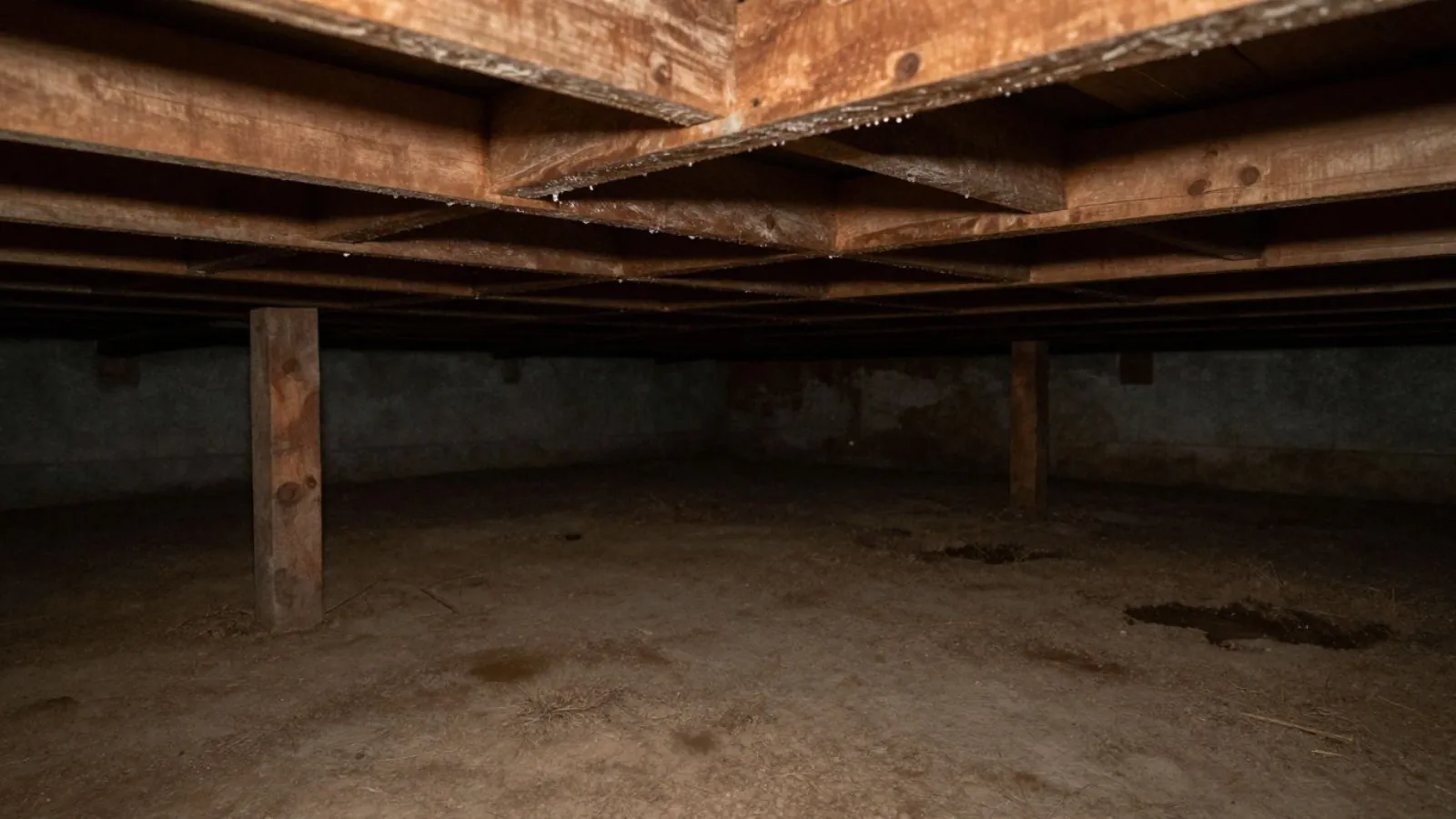
Crawl space water damage in Norton shows up as a musty smell inside the house, cold floors, sagging insulation or standing water seen through the access hatch. Because nobody checks the space often, a problem can run for a long time before it is noticed.
If you can look safely, photograph the space from the hatch. Do not crawl in with standing water if there is wiring nearby. Our line answers questions at any hour, and a crew with protective gear can inspect and dry the space.
Why crawl spaces stay wet
Crawl spaces sit low and hold humidity. Water gets in through foundation walls, a high water table after heavy rain, a plumbing leak overhead or an open vent in humid weather. Bare soil releases moisture continuously, so even a dry-looking space can be damp.
Wet insulation falls and stops working, subfloor framing absorbs moisture, and ductwork can carry the damp air into living space. The EPA's guidance on moisture control stresses that drying water-damaged materials promptly, within 24 to 48 hours, helps prevent mold.
How a crawl space is dried
Access is tight, so the plan must be efficient.
Inspect and photograph
A crew enters with protective gear, checks wiring and records conditions.
Remove wet material
Sagging insulation, loose debris and wet vapor barrier sections come out.
Pump and dry
Standing water is pumped and small dehumidifiers and air movers run.
Address the source
A plumber or drainage contractor fixes the cause, then moisture is rechecked.
Every crawl space is built differently, so ask a building professional what suits yours before changing vents or adding a barrier.
Water in the crawl space?
Photograph it from the hatch and call to book a visit.
Crawl space water sources and fixes
The source decides who comes next.
| Source | Sign | Next step |
|---|---|---|
| Plumbing leak above | Drips from the floor above, wet joists. See burst pipe water damage | Plumber repairs, crew dries |
| Groundwater or runoff | Water at the walls after rain | Drainage contractor, then drying |
| Humidity and bare soil | Damp smell, condensation on ducts | Vapor barrier and dehumidification |
| Past flooding | Stained or rotted framing. See flood damage cleanup | Inspection, drying, possible repairs |
What a safe inspection includes
A crew entering a crawl space wears protective gear, checks for live wiring and gas lines, looks at the underside of the floor and the sill plate and photographs everything before touching it. They read moisture in the framing and the soil and check whether ductwork is wet.
Photos from the first visit become the baseline for the claim and for later comparison. If the space has a sump or drain, they note whether it works.
Insulation, vapor barriers and ductwork
Fiberglass batts that sag away from the subfloor are a clear sign of long-term moisture. They are removed because they hold water against the wood and do not insulate when wet. Vapor barrier sheets that are torn or lifted let ground moisture rise.
Ductwork running through the space can sweat in summer. Condensation on metal ducts drips onto insulation and framing. A crew notes this and suggests insulating or sealing the ducts if it is the source.
Keeping the space dry afterward
Once the cause is fixed and the space is dry, small steps help. Keep gutters clear, point downspouts away from the foundation, check that the grade slopes away from the house and look in the space after heavy rain.
Dehumidifiers designed for crawl spaces exist, but check with a building professional about whether one fits your space and your local rules before installing anything.
What affects the cost of crawl space work
Access and area are the main drivers.
Access
A small hatch slows every task.
Area
More square footage means more equipment.
Insulation
Wet insulation is removed and replaced.
Source repair
Drainage or plumbing work is separate.
Mold
If growth is present, remediation is scoped on its own.
Ask your insurer whether the cause is covered. Sudden plumbing failures often are, while ground moisture and humidity generally are not.
What to do first, and what not to do
A crawl space is a confined space, so caution comes first.
Safety steps
- Look from the hatch and do not enter if water is near wiring
- Do not crawl in with a gas or sewage smell present
- Photograph what you see before anything is disturbed
- Do not run electrical tools in a wet crawl space
Common questions
A musty smell in the house, cold floors, sagging insulation, condensation on ducts or visible water at the hatch are common signs. A moisture meter and a camera confirm.
Not with standing water near wiring or if you smell fuel or sewage. Look from the hatch with a flashlight and let a crew enter with protective gear.
Mold needs moisture, and a wet crawl space offers plenty. Health questions belong with your physician. Drying promptly lowers the chance of growth.
Drainage and plumbing repairs are separate trades. The crew dries the space and coordinates with whoever fixes the source.
It covers the soil to slow moisture rising into the space. A contractor can advise whether one fits your crawl space.
Standards and references
Two published standards frame the work: ANSI/IICRC S500 for water and S520 for mold. Official consumer information lives with the EPA on moisture and the Massachusetts Division of Insurance on coverage.