
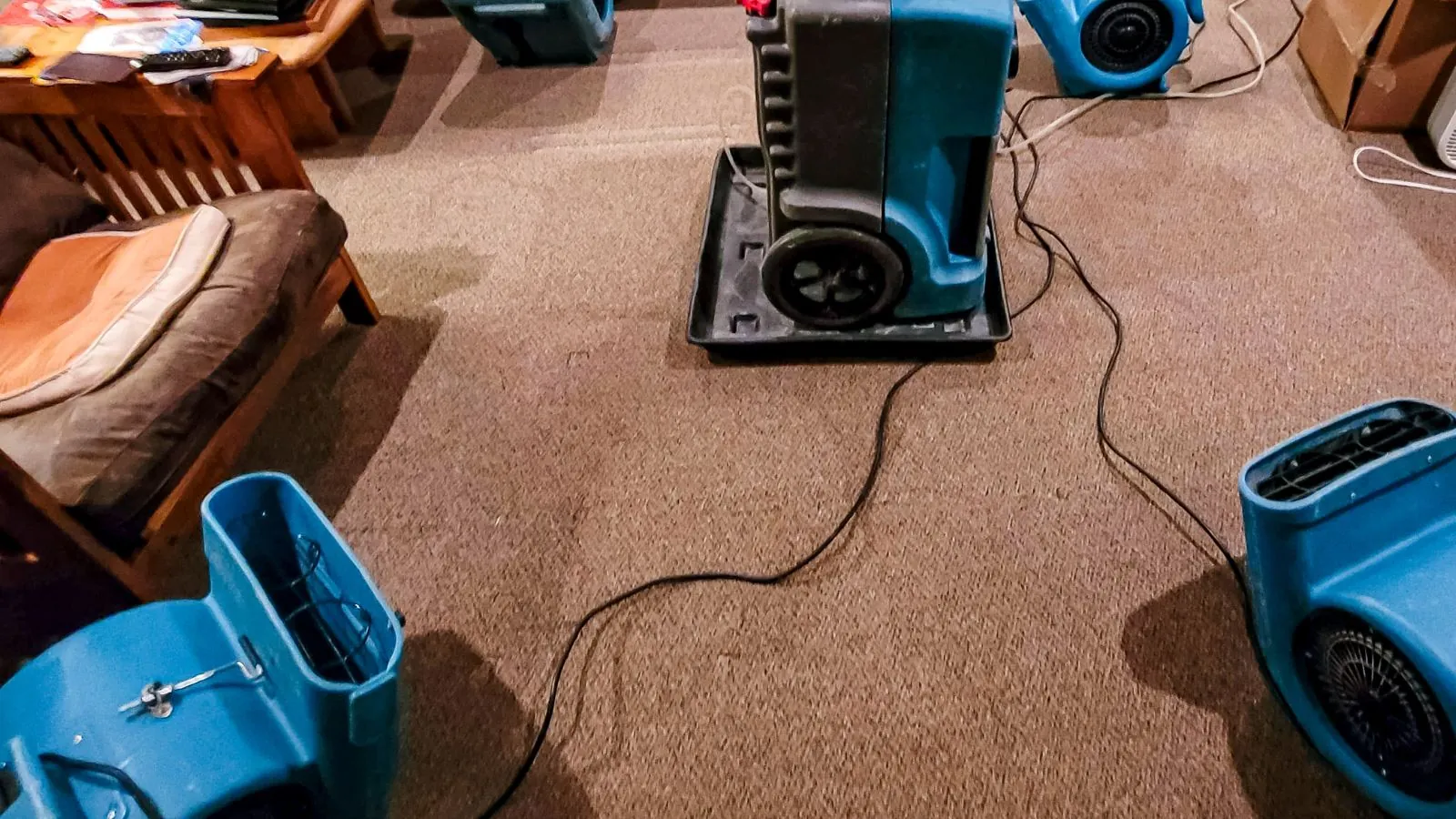
Structural drying is the work that happens after the puddles are gone. Water soaks into drywall, wood framing, concrete and insulation, and it leaves slowly. Without controlled drying, a house that looks dry can hold enough moisture to grow mold and warp floors.
This page explains what the equipment does, how readings are taken and what a drying log should show. If you are not sure whether your walls are really dry, a crew can check with meters, and our line is open any time you have a question.
Why the walls are still wet when the floor looks dry
Visible water is the smallest part of a water loss. Drywall acts like a sponge and pulls water up from the floor. Framing and subfloor absorb it and hold it. Insulation traps it. The surface can feel dry while the inside of a wall reads wet.
Symptoms that suggest hidden moisture include a musty smell, peeling paint, baseboards that cup, floors that feel soft and a room that stays humid after the water is gone. Those are the signs people search for, and structural drying is the response. Older mill-village homes are discussed on the Barrowsville page.
The equipment, and what each piece does
Air movers push dry air across wet surfaces so moisture leaves the material. Dehumidifiers pull that moisture out of the air so it does not settle somewhere else. Both are needed together, because fans alone just move damp air around the room.
Desiccant units are sometimes used where low temperatures slow normal dehumidifiers, which can matter in a New England winter. Heat is added where needed. Specialty drying mats pull water from hardwood floors without removing them. The mix depends on the materials and the room.
Walls still feel damp?
Call and ask about a moisture check.
The drying cycle, day by day
Drying is not a single visit. It is a cycle of equipment, readings and adjustment.
Set and map
Equipment is placed, and moisture readings are taken in a grid and recorded.
Run and monitor
Equipment runs while temperature and humidity are logged.
Adjust
Equipment moves as areas dry, and stubborn wet spots get extra attention.
Verify dry
Readings must reach the target for each material before equipment leaves.
The ANSI/IICRC S500 standard describes drying goals and record keeping, and homeowners can ask any company whether it works to that standard.
Moisture and materials: what takes longest
Dry times depend on what is wet.
| Material | How it holds water | Typical drying approach |
|---|---|---|
| Drywall | Absorbs fast, dries moderately | Cut back if sagging, otherwise dry in place. See wall and drywall repair |
| Wood framing | Absorbs slowly, releases slowly | Air movers and dehumidifiers for days |
| Hardwood flooring | Cups as it absorbs. See hardwood floor repair | Drying mats and dehumidification |
| Concrete slab | Holds moisture for a long time | Dehumidification, extended monitoring. See basement water damage |
Reading a drying log
A drying log lists each room, the material, the starting reading, the daily readings and the target. It also lists the equipment placed and the temperature and humidity in the room. You should be able to see the numbers fall from day to day.
If the numbers stall, the crew changes the setup, adds equipment or opens a cavity. A log that never changes, or that has no readings at all, is a warning sign.
What affects the cost of structural drying
Drying is billed by equipment days and labor.
Area and volume
More wet space needs more equipment.
Materials
Concrete and thick framing take longer to dry.
Water category
Contaminated water adds cleaning before drying. See flood damage cleanup.
Season
Cold, damp weather slows drying.
Access
Closed cavities and finished walls add work.
Equipment days are often part of an insurance claim when the loss is covered. Keep the drying log, since it shows what was wet and when it dried. Check with your insurer about what your policy covers.
What to do first, and what not to do
Drying equipment works best when the room is left alone.
Safety steps
- Keep doors to the wet rooms closed while equipment runs
- Do not unplug or move drying equipment without calling
- Do not paint or cover walls until readings are dry
- Report new smells or stains to the crew
Common questions
Most jobs take three to five days. Thick materials, concrete slabs and cold weather take longer. Readings on each visit tell you when the structure is dry.
A rental can help with humidity, but it will not dry a wall cavity at the speed a crew's equipment will. The bigger gap is measurement, because a crew takes readings and adjusts.
Air movers and dehumidifiers make steady noise, and they run around the clock. Most households find it easier to stay elsewhere for a night or two.
Readings in each material should match dry reference readings from an unaffected area. Ask to see the log.
Materials that stay wet for days may need to be removed, and mold risk goes up. Starting promptly makes dry-in-place more likely.
Standards and references
This page follows the vocabulary of ANSI/IICRC S500 (water damage) and S520 (mold). For insurance questions see the Massachusetts Division of Insurance, and for mold and moisture basics see the EPA.