
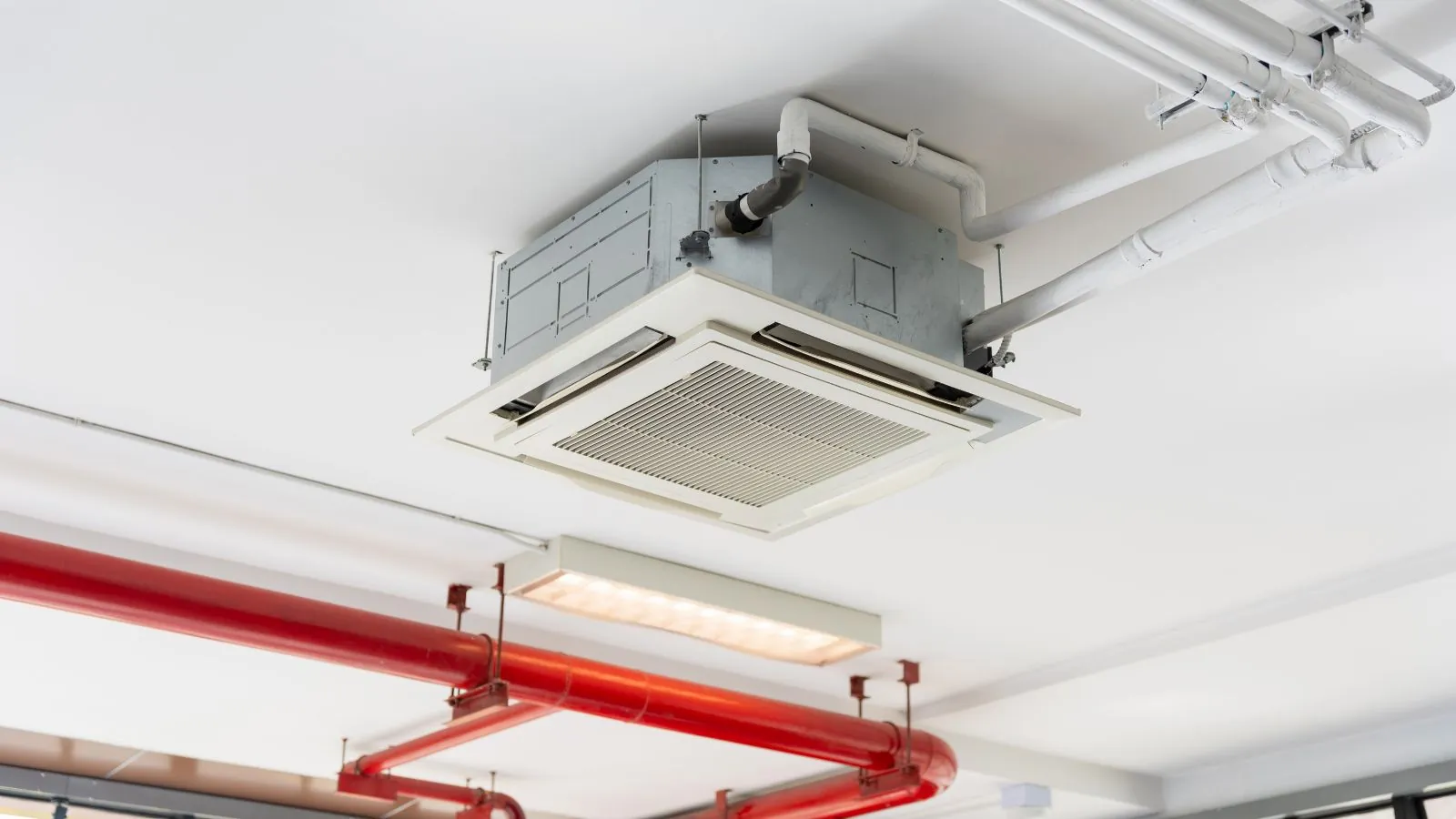
AC leak water damage in Norton usually comes from a condensate drain that clogged, a cracked drip pan or a frozen coil that melted. The unit keeps running and the water keeps coming, often above a ceiling where nobody looks. This is a drying and repair job, and our line is open when you need to ask a question.
Turn the system off at the thermostat to stop condensate from forming, place a bucket under any drip, and photograph the stain. Do not run the unit until the drain is cleared. If the ceiling is sagging, keep people out from underneath it.
Where the water comes from
Air conditioners pull moisture out of the air and carry it away through a small drain line. When that line clogs with algae or debris, the pan overflows. An air handler in an attic, a closet or above a finished ceiling can then spill into the building materials.
The EPA's guidance on moisture control specifically advises keeping air conditioning drip pans clean and drain lines unobstructed and flowing. That advice is practical here, because a pan that is checked each spring is far less likely to overflow in July.
Signs the leak is already inside the building
The first sign is a brown stain on a ceiling below an air handler, or a musty smell in a closet. Insulation near a leaking pan stays wet and cold, so it does not dry on its own. Drywall absorbs water slowly and the stain can grow for days after the unit stops.
Because the water is often clean condensate, the damage is usually a Category 1 situation at the start. It can change if it sits, since organic material in wet insulation can degrade. That is the reason the work is scheduled promptly rather than after the next heat wave.
Ceiling stain still growing?
Shut the AC off and call the line.
AC leak: cause, symptom and cleanup
The source decides whether a service technician or a restoration crew is the right first call.
| Cause | Symptom | Who handles it |
|---|---|---|
| Clogged condensate drain | Overflowing pan, stain below the unit | HVAC tech clears the drain, restoration dries the area |
| Cracked or rusted drip pan | Water at the base of the air handler | HVAC tech replaces the pan, crew dries insulation and drywall |
| Frozen evaporator coil | Large melt-off when the unit shuts down | HVAC tech finds the cause, crew handles water |
| Disconnected drain line | Constant drip, damp ceiling | Pipe is reattached, crew dries and repairs. See ceiling water damage repair |
For water that spreads beyond the unit, the drying methods on the structural drying page apply.
The drying and repair sequence
Most AC leaks are caught after the stain appears, so the first task is finding how far the moisture moved.
Read the moisture
Meters and thermal imaging map the ceiling, wall tops and insulation.
Remove what cannot dry
Wet insulation and soft drywall are cut out.
Dry the cavity
Air movers and a dehumidifier run until framing reads dry.
Repair and close
Replacement drywall and paint follow once the plumber or HVAC tech confirms the leak is fixed.
Always confirm the drain is cleared before the crew starts, or the repair is wasted.
What to ask an HVAC technician
Ask the technician to clear and flush the condensate line, inspect the pan, test the float switch and check the evaporator coil. Ask how often the line should be cleaned and whether a secondary drain pan is installed.
What affects the cost of an AC leak repair
Condensate leaks are usually modest in volume, so cost mostly follows the building materials.
Duration
A leak found in a day soaks less than one running for weeks.
Location
Attic and above-ceiling spaces take more work to reach.
Insulation
Wet insulation is removed and replaced.
Ceiling finish
Textured or plaster ceilings take longer to repair.
Mold risk
Long-wet materials may need the steps on the mold remediation page.
Condensate leaks may be covered when sudden, while a clogged line from poor maintenance can be treated differently. Check with your insurer and keep the HVAC technician's invoice.
What to do first, and what not to do
An AC leak is usually clean water at first, but the electrical risk is real.
Safety steps
- Turn the system off at the thermostat before anything else
- Keep people away from a bulging ceiling
- Do not run the unit until the drain is cleared
- Do not touch a wet light fixture or switch
Common questions
Turn the system off at the thermostat, place a bucket under the drip, keep people out from under a sagging ceiling, and photograph the stain. Then call for drying and have an HVAC technician clear the drain.
It starts as clean water but can pick up debris and organic growth from the pan and insulation. If it has sat for days, wet materials are usually removed. Questions about health belong with your physician.
If the drywall is stained but firm, it may dry in place. Sagging or soft drywall is cut out and replaced.
No. An HVAC technician clears the drain or fixes the unit. The restoration crew handles drying and repair of the building materials.
Have the drain line and pan checked each season, clean the line, and consider a float switch that shuts the unit off if the pan fills. Your HVAC technician can advise.
Standards and references
ANSI/IICRC S500 is the published standard for professional water damage restoration, and S520 covers mold remediation. Read the Massachusetts Division of Insurance for claim basics and the EPA mold pages for moisture control.