
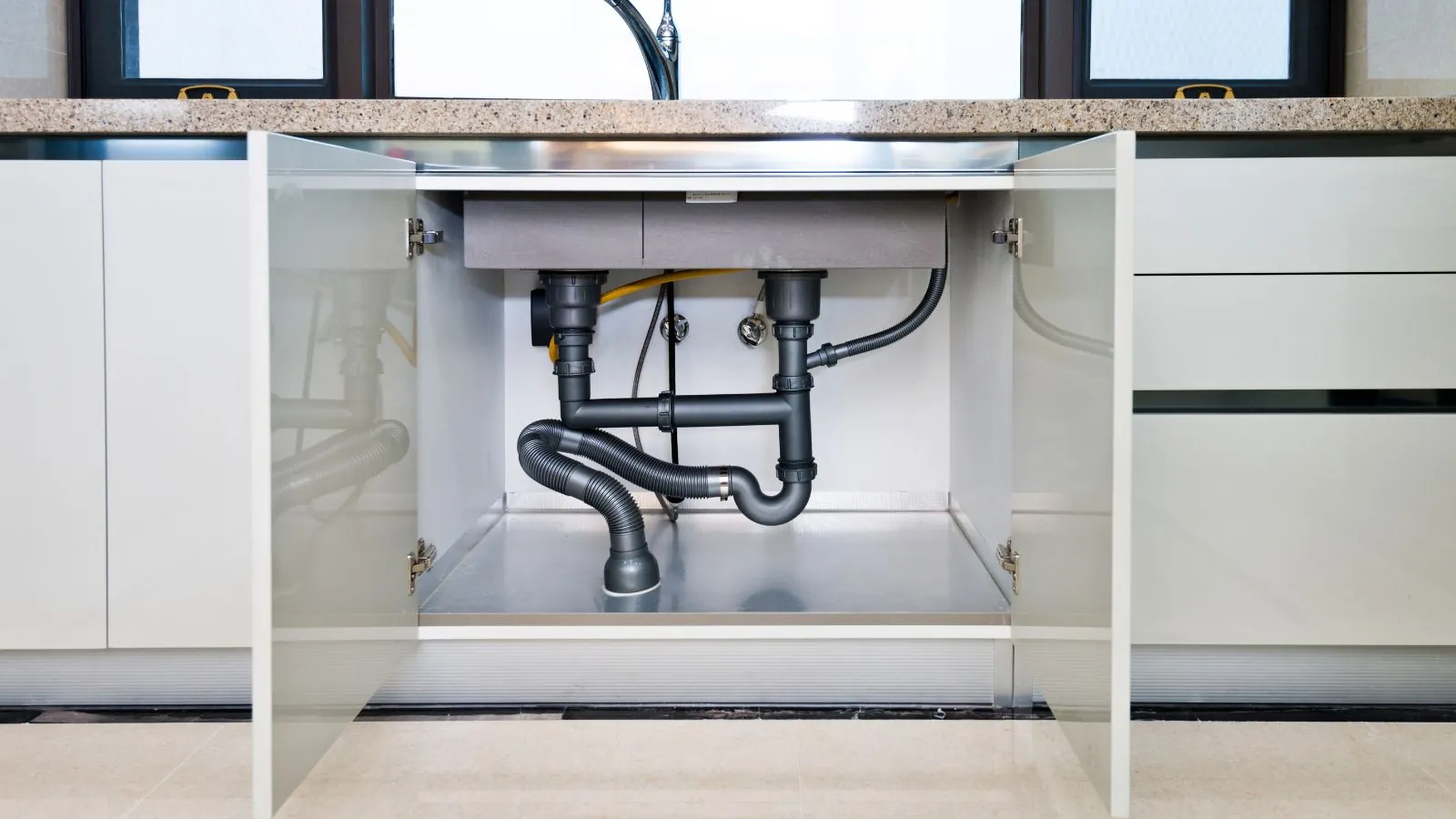
Kitchen water damage in Norton usually starts small and hidden. A dishwasher line weeps, a sink trap lets go, or the ice-maker line behind the refrigerator drips for weeks. The water collects under cabinets, where it soaks particleboard bases and the subfloor long before the floor shows a stain.
If the water is still running, close the shutoff under the sink or at the appliance, then photograph the area. Our line answers at any hour with questions, and a crew can look at the scope with moisture meters instead of guessing.
Why a kitchen dries differently from other rooms
A kitchen packs cabinets, appliances, plumbing, tile and often a floating floor into a small space. Water enters the gap between the toe-kick and the subfloor and spreads sideways, so the visible puddle is rarely the full picture.
Cabinet bases made of particleboard swell when wet and do not return to shape. Solid-wood and plywood bases tolerate more. The first thing a crew does is test the base, the back of the cabinet and the wall behind it with a meter, because those readings decide what stays.
The drying plan for a wet kitchen
The sequence protects the cabinets that can be saved and removes the ones that cannot.
Stop and photograph
Water off, appliances unplugged if safe, and the whole room photographed before anything moves.
Extract and pull
Standing water is removed, and the toe-kicks come off to expose the cavity under the cabinets.
Map moisture
Meters and thermal imaging show the wet cabinet bases, subfloor and wall bottoms.
Dry in place
Air movers and a dehumidifier run, sometimes with small holes drilled to move air into closed cavities.
Many kitchen jobs end with only the cabinet toe-kicks and a section of flooring replaced, as long as the work starts early.
Leak behind the cabinets?
Shut the valve and call to schedule a drying visit.
What can be saved in a wet kitchen
Materials differ. The table below shows how a crew typically sorts them after the water has been out for a day.
| Material | Usually dried in place | Usually removed |
|---|---|---|
| Solid wood or plywood cabinet base | Yes, if the readings drop within days | If the wood is swollen or delaminating |
| Particleboard cabinet base | Rarely | Commonly, because it swells and weakens |
| Tile floor | The tile, often yes | Grout and subfloor underneath if they stay wet. See hardwood and plank floors for wood |
| Drywall behind cabinets | If wet only a short time | If soft, stained or wet more than a couple of days. See wall and drywall repair |
Countertops, appliances and under-sink storage
Stone and laminate countertops usually survive a leak, but the substrate under laminate can swell. Remove items from under-sink cabinets before the crew arrives, because stored cleaners and bags soak up water and hide the wet area.
If the dishwasher or refrigerator was moved, ask the crew to check the floor where it sat before it goes back. A wet floor under an appliance is a common repeat leak.
What affects the cost of kitchen water damage work
No two kitchens are the same, so the price depends on the following.
Source and category
Clean supply water costs less than water that sat or picked up grease and debris.
Cabinet material
Particleboard replacement adds cost over a dry-in-place plan.
Flooring
Sheet vinyl, tile and plank each respond differently.
Hidden spread
Water that moved into a hallway or under a wall adds scope.
Rebuild choices
Matching cabinets and countertops is a separate decision.
Sudden failures of a hose or fitting are often covered by homeowners insurance, while slow leaks are often excluded. Ask your insurer which applies, and photograph the failed part. For appliance-specific causes, see appliance leak water damage.
Related problems a kitchen leak can cause
If the leak ran for days, a musty smell is a sign to read the mold remediation page. If the water came from above, the ceiling below may need attention, covered under ceiling water damage repair. Large losses that reach other rooms follow the plan on structural drying and dehumidification.
What to do first, and what not to do
Kitchens mix water with outlets and appliances, which makes order important.
Safety steps
- Close the supply valve and unplug nearby appliances only if the cord is dry
- Do not stand in water near outlets
- Do not use a household vacuum on standing water
- Leave cabinets in place until readings are taken
Common questions
Signs include swollen toe-kicks, a musty smell, soft flooring near the sink or dishwasher and a stain that returns after you wipe it. A moisture meter confirms it, and a crew can check without cutting anything open first.
Often, if the bases are plywood or solid wood and drying starts within a day or two. Particleboard bases tend to swell and are usually replaced.
A household fan helps a little on the surface but does not dry cavities. A dehumidifier and air movers aimed under the cabinets do more. A crew sets those up and measures progress.
Small leaks often dry in two to four days. Larger or older leaks take longer, and readings are taken on each visit to confirm.
Sudden and accidental leaks are often covered, gradual ones often are not. Check your policy, ask your insurer, and keep your photos and the failed part.
Standards and references
This page follows the vocabulary of ANSI/IICRC S500 (water damage) and S520 (mold). For insurance questions see the Massachusetts Division of Insurance, and for mold and moisture basics see the EPA.