
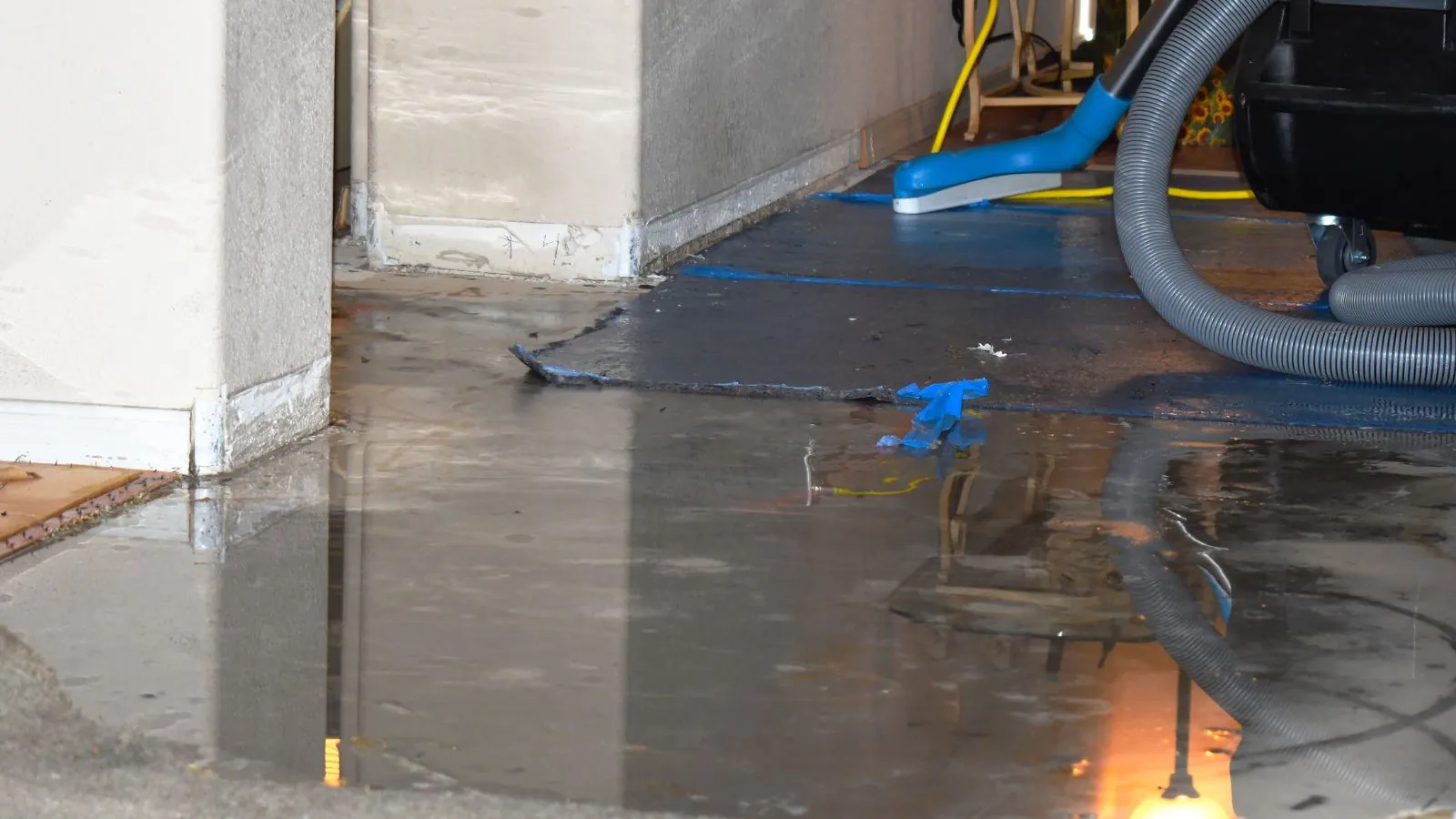
Standing water is an emergency because every hour it sits, it wicks into drywall, baseboards and subfloors. Our 24/7 line is open now, and water extraction in Norton starts with a call that tells the crew what is wet, how deep it is and where the source is.
While you wait, stop the source if you can reach the valve safely, keep everyone out of the water, and do not plug in anything that sits in or near it. If the water touches outlets or the panel, stay away and call the utility or 911 before calling us.
When standing water is an emergency
Ankle-deep water in a basement is an emergency. So is an inch of water across a kitchen that has soaked into the cabinets. Water that reaches electrical outlets, or water that came from a toilet or drain, is also an emergency, and the second case needs a crew with protective gear.
Norton gives homeowners plenty of reasons to expect this call. The town's 2018 resilience workshop summary described much of Norton as low-lying, with flooded roads at Richardson Avenue, Walker Street and Route 123. If your street sits near one of those low spots, a basement that takes water in a hard rain should be pumped the same day, not the next weekend.
What happens on an extraction call
Water extraction has one job, which is to get liquid water out before it becomes moisture in the structure. The sequence below is the same whether the water is two inches deep in a den or six inches deep in a basement.
Find the source
The crew confirms the water has stopped or shuts it off, and checks the panel and outlets before anyone steps in.
Place the pump
Submersible pumps go into the deepest point and hoses run to a safe discharge.
Extract the rest
Extraction units and wands pull water out of carpet, pad and low spots the pump cannot reach.
Hand off to drying
Moisture meters map what is still wet, and drying equipment takes over the damp materials.
Extraction is the first stage, not the whole job. Wet drywall, pad and subfloor still hold moisture after the standing water is gone, which is why a crew moves straight into structural drying and dehumidification once the floor is clear.
Water still standing right now?
Call the 24/7 line and tell the dispatcher how deep it is and where it started.
Where the water sits and how it comes out
The method changes with the surface. This table shows the usual approach for the rooms homeowners call about most often.
| Where the water is | Typical removal method | What happens next |
|---|---|---|
| Carpeted room | Extraction wand pulls water from carpet and pad | Pad is usually removed, carpet may be lifted for drying. See carpet water damage |
| Hardwood or laminate | Wand and squeegee tools lift surface water quickly | Moisture readings decide if boards can be dried in place. See hardwood floor water damage |
| Basement slab | Submersible pump, then an extraction unit for the film left behind | Walls and framing are checked for wicking. See basement water damage cleanup |
| Finished room with drywall | Pump if deep, extraction on floors, then wall moisture readings | Baseboards and lower drywall may be cut and dried. See wall and drywall repair |
Pumps, wands and units: the equipment, in plain words
A submersible pump moves deep water fast, but it stops working when the water gets shallow. That is where weighted extraction wands and portable extraction units take over, because they pull water out of carpet fibers and from the thin film across a slab that a pump cannot touch.
Crews also carry moisture meters and a thermal imaging camera. The meter gives a number for each material, and the camera shows cooler, wetter areas behind a finished wall. Those readings are the record of what was wet on day one, and they are what makes the later drying measurable.
What moves the price of an extraction job
Every job is different, so a fair number comes after the crew sees the room. These are the factors that decide scope and price.
Water category
Clean supply water is simpler than water that picked up contaminants. See sewage backup cleanup for Category 3.
Depth and area
More square footage and deeper water mean more pump time and more extraction passes.
Materials soaked
Carpet pad, insulation and drywall each add removal and disposal work.
Drying days
Extraction ends quickly, but equipment time for drying can run for several days.
Rebuild scope
Anything cut out needs replacing, and that work is scoped separately.
Ask your insurer what your policy says. Sudden and accidental water damage is often covered, gradual leaks and neglect often are not, and flood damage usually needs separate flood coverage. The Massachusetts Division of Insurance says plainly that standard homeowners policies do not cover flood. Photos taken before anything is moved will help any claim. Want your real number? Call (508) 286-8971 and the scope and price are explained before work starts.
Working with the whole Norton area in mind
The same crews cover nearby towns, including Mansfield and Easton, so a crew is often already moving through the area. Burst supply lines are the most common cause of sudden water, and the steps for that case are on the burst pipe page, while a wide spread of rising water is covered under flood damage cleanup.
Common questions
Yes. The line answers around the clock, every day of the year. Same-day response is offered when a crew is available, and the person on the phone will tell you what to do while you wait.
Extraction removes liquid water with pumps and extraction units. Drying removes the moisture left in materials with air movers and dehumidifiers. Most jobs need both, in that order.
For a small spill, a wet vacuum can work. For water deeper than a couple of inches, or any water that touched electrical items or came from a drain, call a crew. The hidden moisture in walls and subfloors is the part homeowners usually miss.
Sometimes. Carpet from clean water can often be dried in place if it is treated quickly, but the pad underneath is commonly removed. Contaminated water usually means the carpet and pad are discarded.
Take wide shots of each wet room, close shots of the water line on walls, and the source of the water if it is visible. Do not move belongings first. Your insurer will ask what the room looked like.
Standards and references
Ask any company whether its crews work to ANSI/IICRC S500, the water damage restoration standard, or S520 for mold. The EPA explains moisture control, and the Massachusetts Division of Insurance publishes insurance guidance.