
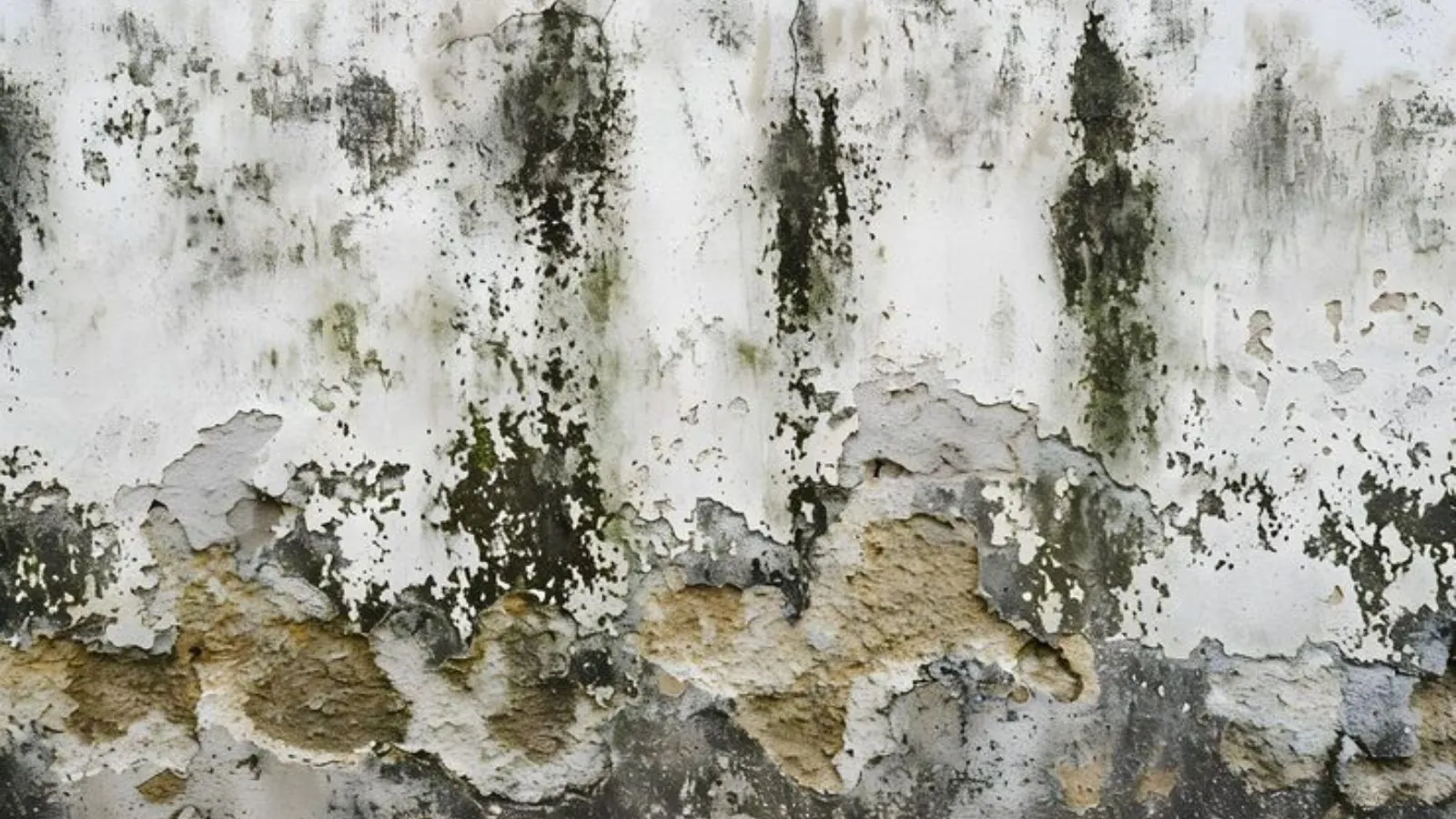
People use mold and mildew almost interchangeably. In practice, mildew refers to flat, surface growth, often on bathroom tile or window sills. Mold refers to a broader group that can be fuzzy and can penetrate porous materials. Both need moisture.
Telling them apart by eye is imperfect. This article gives general clues and focuses on the response, since the cure is moisture control either way.
What each usually looks like
Mildew tends to grow flat in white, gray or yellow patches that can turn brown or black. It often appears on shower walls, windowsills and damp fabric. Mold can be green, black, blue or white, and often looks fuzzy or slimy.
Color is not reliable. Different species look similar, and the same species changes with age. Do not rely on color to judge a problem.
Mold and mildew compared
A quick comparison.
| Trait | Mildew | Mold |
|---|---|---|
| Texture | Flat, powdery | Fuzzy or slimy |
| Where | Surfaces like tile and sills | Porous materials too |
| Depth | Surface | Can penetrate |
| Usual fix | Detergent and drying | Removal of porous materials if growth is deep |
| Root cause | Moisture | Moisture |
For deeper growth, see mold remediation.
Where they grow
Bathrooms, kitchens, laundry rooms, basements and window frames are common places. Anything that stays damp and has poor airflow can grow either. Behind furniture against exterior walls is a classic spot because the wall stays cool.
Attics, crawl spaces and closets with poor ventilation also collect growth. In each case, the cause is a source of moisture or condensation.
What to do about surface growth
For a small patch on a hard surface, scrub with detergent and water, wipe clean and dry the area. Fix the source: ventilate the bathroom, run a fan, repair a leak. Watch the spot for several weeks.
If the growth returns, covers a large area or sits on drywall or wood, treat it as mold and consider a professional. Do not paint over it.
Why the distinction matters less than the moisture
Your response should be driven by the material and the size of the area, not the name. Surface growth on tile is a cleaning job. Growth in drywall is a removal job. Growth after a flood is a different job again.
Condensation, leaks and humidity are the usual causes. Fix them and the growth stops being fed.
When it follows a water loss
Mold after a leak or flood is a sign that materials stayed wet. Drying within 24 to 48 hours helps prevent it, as the EPA notes. If you have a loss, start with water extraction and then dry the structure.
For wet drywall, the wall and drywall repair page explains what is cut out and what is dried in place.
Questions for a physician, not a website
If someone in the home has symptoms and you wonder about mold, speak to a physician. This site cannot say how any person will react, and it does not diagnose. What it can do is explain how to find and fix the moisture behind the growth.
Humidity, condensation and the cold-wall effect
Most household mildew and mold starts with condensation, not leaks. Warm indoor air carries moisture, and when it meets a cold surface such as a window, an exterior wall corner or a basement block wall, it condenses. A closet packed against an exterior wall, a bathroom with no fan and a bedroom with the door closed all create these conditions.
The EPA suggests keeping indoor humidity below 60 percent and ideally between 30 and 50 percent. A cheap hygrometer shows the number. If the reading sits above 60 percent for days, expect condensation to show up on cold surfaces first.
Habits that cut surface growth
Small daily habits do more than strong cleaners. They remove the moisture the growth depends on.
Household moisture habits
- Run the bathroom fan during showers and for twenty minutes afterward
- Wipe condensation from windows and tile in the morning
- Vent the clothes dryer to the outside and keep the vent clear
- Leave space between furniture and exterior walls
- Fix drips under sinks and around tubs as soon as you see them
- Use a dehumidifier in a basement through humid months
These steps matter more than which product you use to scrub.
Cleaning small areas safely
For a small patch on tile, sealed wood or painted surfaces, use detergent and water and a soft brush. Rinse and dry the surface. Wear gloves and eye protection. Avoid mixing cleaners, and avoid scrubbing dry growth in a way that throws dust into the air.
Throw away cleaning rags in a bag. If the patch is on grout, a stiff brush helps. If it is on caulk that has turned black, replacing the caulk usually works better than scrubbing because growth sits in the material.
Signs it is more than surface mildew
If the growth sits on drywall, ceiling tiles, insulation or carpet, it is probably in a porous material. If a smell persists after cleaning, moisture may be inside a wall. If the patch is larger than a few square feet, plan for professional help.
These signs point to a moisture source that has not been fixed. A moisture meter reading, a leak search and sometimes a small inspection hole tell you more than staring at the patch will.
Mold and mildew on fabric, wood and paper
On fabric, growth shows as spots and a musty smell. Shoes, curtains and stored clothing in damp closets are common. Wash washable items on a hot cycle if the label allows and dry them fully. Items that cannot be washed may be best discarded if growth is heavy.
On paper and books, spots appear on edges and pages. Move them to a dry room and consult a conservator for valuable items. On wood, surface growth can be cleaned from sealed wood, while deep staining or softness points to rot, which is a structural issue.
Key points to remember
Mildew is usually flat surface growth, and mold can be fuzzy and deeper. Both are signs of moisture. Clean small areas on hard surfaces with detergent and water, then dry them. Treat growth on drywall, insulation or carpet as a bigger job. Cut humidity, fix leaks and ventilate. If a patch returns after cleaning, look for the water, not a stronger cleaner. Health questions go to your physician.
A Norton note on humidity and seasons
New England summers bring humid air that can condense on cool basement walls. The National Weather Service publishes forecasts, and humid spells are a time to check basements. Norton's 2018 resilience workshop summary describes much of the town as low-lying, a setting where damp basements are more common. Ask the Norton building department before changing drainage.
Nearby help
The same advice applies in Easton and South Easton.
Common questions
It is usually surface growth, but both mean moisture. Fix the cause.
Detergent and water work for hard surfaces. Bleach does not penetrate porous materials.
Color does not tell you. Ask a physician about health questions.
Rarely. The response depends on size and material.
The moisture is still present.
References for this article
Read more at the EPA and the Massachusetts Division of Insurance. The ANSI/IICRC S500 and S520 standards describe how professionals handle water and mold. Verify anything that depends on your policy or your address.