
Homeowners often search this question with worry. This article does not give medical advice and cannot say how any individual will react. It can explain what mold means for a building, what the EPA recommends about moisture and what practical steps are sensible.
If anyone in your home has health concerns, call a physician. If you see growth, treat it as a moisture problem first.
What mold tells you about the building
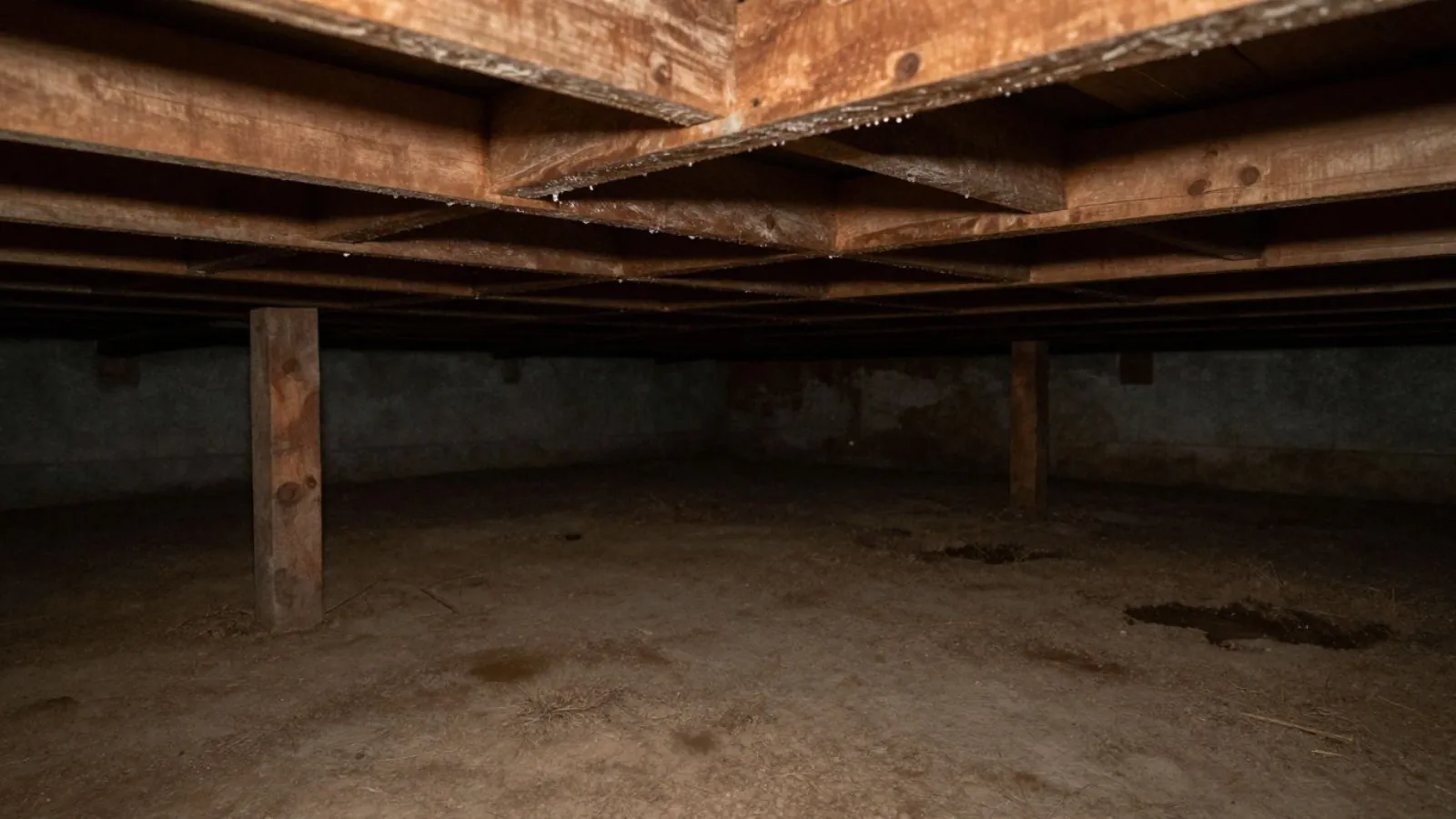
Visible mold means a surface has been damp for days or longer. That points to a leak, condensation or a flood that was not dried in time. The mold is a symptom of that moisture.
The EPA advises that the way to control mold is to control moisture, and that water-damaged materials dried within 24 to 48 hours usually do not grow mold. Beyond that window the risk rises.
What mold does to materials
Mold feeds on organic material such as paper-faced drywall, wood and cardboard. Over time it can stain, weaken and rot those materials. Growth also brings a musty smell that can settle into fabrics.
Concrete and block are not food for mold, but dust and stored items on them can be. This is why removing wet porous materials is the first step in cleanup.
Where basement mold usually appears
Look in these places during an inspection.
| Location | Typical cause | Next step |
|---|---|---|
| Bottom of drywall | Wicking from a wet floor | Moisture check. See wall and drywall repair |
| Stored cardboard | Humidity and damp floor | Discard and raise storage |
| Window well corners | Leaks and condensation | Fix drainage |
| Behind a washer | Slow supply or drain leak | Inspect hoses |
Testing: what it can and cannot say
Air and surface tests report what was in a sample at one moment. They do not diagnose health issues, and results vary with conditions. If you want testing, hire an independent assessor who does not also sell removal.
For most homeowners, visible growth plus a moisture source is enough to start. Testing is more useful after remediation, to confirm the work, or when a buyer or lender asks.
Practical steps while you decide
Stop the water. Dry the area. Keep children and pets out of the affected space if you are unsure. Do not disturb the growth. Photograph the area. Then decide whether to clean it or bring in a professional.
If the growth followed a flood or sewage, the water was contaminated and the approach is different. See sewage backup cleanup.
Smell, stains and the signs worth acting on
A musty smell, dark stains on drywall or wood, peeling paint, warped baseboards and condensation on windows are signs of moisture. They do not prove mold, but they warrant a closer look. Many people notice the smell first, because mold grows where it cannot be seen.
If you see growth, resist the urge to scrub it dry or to spray it. Photograph the area, note when you first saw it and look for the source of water. The photos help you decide what to do and help a professional who comes later.
Buying, selling and mold
Mold can come up during a home sale. A buyer's inspector may note staining, and a lender may ask for documentation. A homeowner who can show the moisture source was found and fixed, and that materials were dried or removed, has a stronger story than one who painted over a stain.
Keep records of any water event and the work done. Photos, invoices and drying logs are useful. Testing after the work is an option, and the choice is yours.
Questions that belong to other people
Questions about how mold affects the health of a particular person belong with a physician. Questions about whether a particular company is licensed belong with the state, and you can ask whether your state licenses mold work. Questions about local rules belong with the Norton building department or board of health.
This site can explain how water and building materials behave. It cannot diagnose, and it will not predict how mold affects anyone.
Humidity targets and everyday habits
The EPA suggests keeping indoor relative humidity below 60 percent, ideally between 30 and 50 percent, to discourage mold. A hygrometer costs little. Run a dehumidifier in a damp basement, keep gutters clear, grade soil away from the house and fix leaks promptly.
Ventilate bathrooms and dryers to the outside. Avoid carpet in a basement that gets damp. These habits cost less than any cleanup, and they protect the finish materials.
A calm decision path
First, find the moisture. Second, dry what is wet. Third, remove materials that cannot be dried. Fourth, clean what can be cleaned. Fifth, confirm the area stays dry. At any step, ask a physician about health and a building professional about materials.
This path works for a small corner or a large room. What changes is who does the work and how much containment is needed.
What a professional will look at
A restoration professional looks at the source of moisture, the materials affected, the extent of growth and the airflow and humidity in the space. They photograph and map the area, take moisture readings and recommend a plan. They do not diagnose health conditions.
If you are worried, ask them to explain what they see and what they recommend, and ask your physician about anything related to health.
Storage, finishes and basement habits
Basements with carpet over concrete, paneling against block walls and cardboard storage invite trouble. Sealed concrete, tile, moisture-tolerant paneling and plastic shelving cope better with humidity. If you plan to finish a basement, ask a contractor about vapor barriers and drainage first.
Keep a hygrometer on the wall and look at it weekly in summer. It is a cheap way to see a problem develop.
Key points to remember
Mold means moisture, and moisture damages buildings. Find and fix the water, dry the structure, remove porous materials that cannot be saved and clean what can. Questions about health belong with a physician, not a website. Keep humidity below about 50 percent, keep storage off the floor and check your basement after storms. A short, regular routine prevents the problems that make people search for this question in the first place.
What Norton's planning says about wet ground
Norton's 2018 Municipal Vulnerability Preparedness workshop summary describes much of the town as low-lying, with flooded roads at Richardson Avenue, Walker Street and Route 123. Low ground means a damp basement is more common in wet seasons. The FEMA Flood Map Service Center and the Norton building department are the places to ask about your address.
When to bring in help
Crews follow the process described on the mold remediation page. They also serve Mansfield and Plainville.
Common questions
Treat it as a moisture problem and fix the water. For health questions, ask your physician.
That is a question for your physician. Practically, avoid disturbing growth and keep the area closed off.
Color does not tell you much. A professional or a physician can address specific concerns.
The EPA says drying water-damaged materials within 24 to 48 hours usually prevents growth.
Ask the Norton building department or board of health.
References for this article
Facts here come from the EPA mold and moisture pages, the Massachusetts Division of Insurance and the published ANSI/IICRC S500 and S520 standards. Your own policy and your town decide the details that apply to you.